
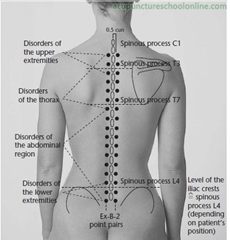
Points alongside the spine
A traditional Hua Tuo Jia Ji reference diagram. The labels describe a traditional point system; they do not establish effectiveness for the conditions shown.
What is the Hua Tuo Jia Ji approach?
Hua Tuo Jia Ji is a traditional group of paired acupuncture points alongside the spine. Yao’s Acupuncture uses these points as part of its approach to pain-related concerns. The location of your symptoms helps shape the conversation about which areas may be appropriate to treat.
The term spinal acupuncture describes the region and point selection. It does not mean injection into the spinal canal or manipulation of the vertebrae. If you have had spinal surgery, a recent injury, or imaging that identified a particular condition, bring that information so the practitioner can consider it before treatment.
How can it fit into care for back or neck pain?
Acupuncture is one of the nondrug options discussed in clinical guidance for chronic low-back pain. Evidence for acupuncture in general does not establish that one specific Jia Ji protocol works for every spinal condition. Your diagnosis, symptom pattern, and response should guide decisions about continuing care.
A useful starting point is to explain what movement is difficult: looking over a shoulder, standing after sitting, or bending during everyday tasks. Describe whether symptoms stay in one area or travel into an arm or leg. Bring notes from other care so that the discussion reflects the whole picture.
What should I share before treatment?
Mention new weakness, numbness, changes in walking, and any symptoms that have recently become more severe. Some back and neck concerns require medical evaluation before complementary treatment. Sudden loss of bladder or bowel control with back pain, or rapidly progressing weakness, calls for urgent medical attention.
Also discuss osteoporosis, surgery, pregnancy, bleeding concerns, and current medicines. Tell the practitioner which positions you can tolerate and whether lying on your stomach is uncomfortable. Treatment planning should account for these limits, and you should be able to ask for a pause or a change in position.
Further reading
Explore the research and safety information behind these treatment discussions.
- NCCIH: Low-Back Pain and Complementary Health Approaches ↗
- NCCIH: Acupuncture — Effectiveness and Safety ↗
Health information is educational. Your practitioner can discuss how it applies to your history and current medical care.